

Learn how AI Overviews, featured snippets, and generative search are changing SEO — and what businesses must do to protect traffic and visibility.
In this post, we break down exactly what zero-click search is, why it's accelerating, how AI Overviews make it worse, and what you can do to protect your organic traffic before the gap grows wider.
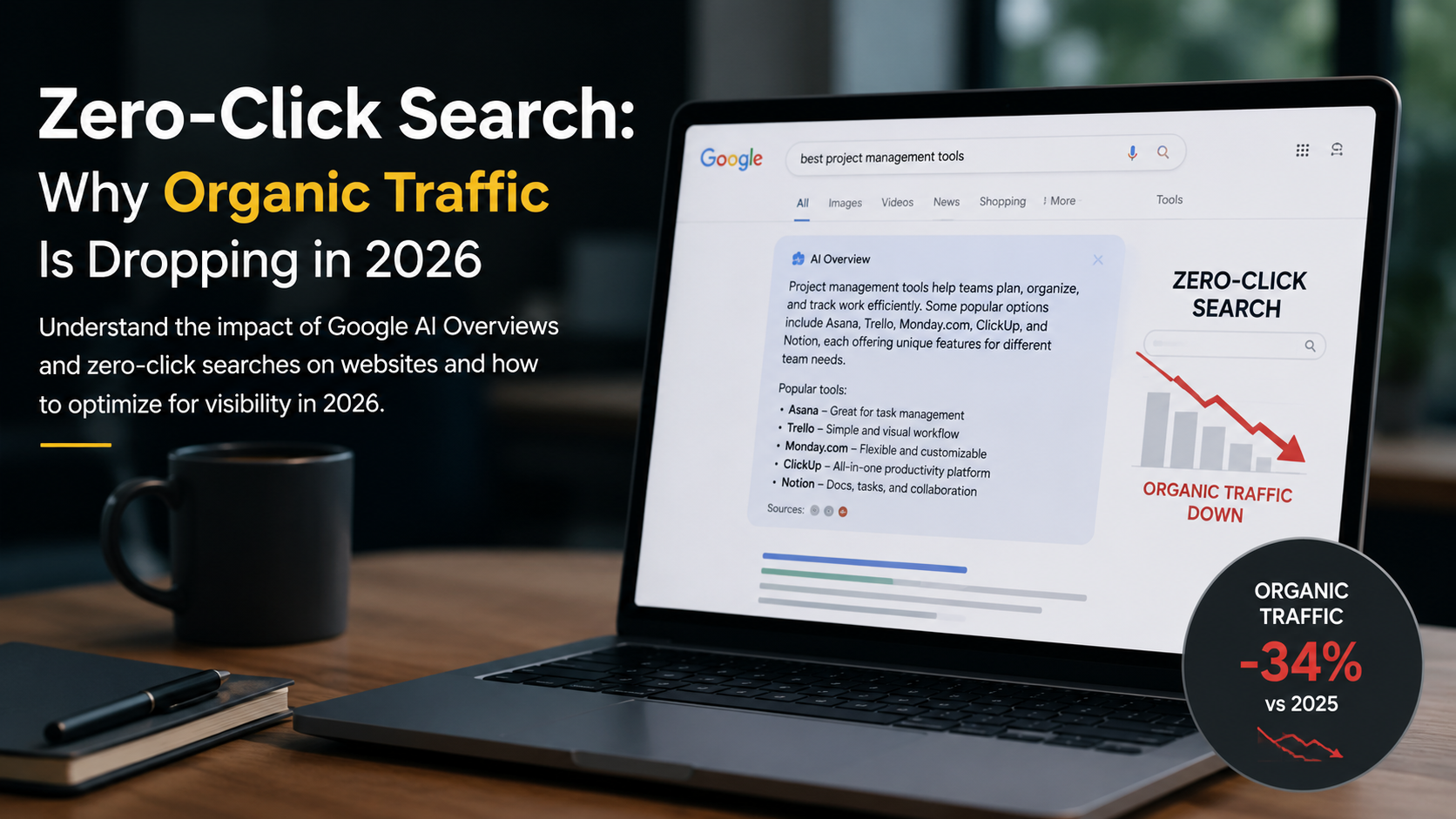
Zero-click search happens when users get answers directly on the search engine results page (SERP) without visiting a website.
Google now answers many queries using:
Because users often find answers instantly, websites may lose clicks even when rankings remain stable.
This is one of the biggest reasons businesses are seeing an organic traffic drop in 2026.
Many businesses notice a confusing pattern in Google Search Console:
This usually indicates that AI-generated SERP features are intercepting user attention before visitors reach your website.
Google AI Overviews summarize information from multiple websites directly inside search results.
Users often receive complete answers without needing to click any source.
Informational content is affected most heavily because AI systems can easily summarize definitions, tutorials, and basic educational content.
Not all search queries lose traffic equally.
These are easy for AI systems to summarize instantly.
Transactional and commercial-intent searches still generate clicks because users need to compare providers, pricing, reviews, and portfolios.
Traditional SEO alone is no longer enough.
Modern visibility requires AI-search optimization strategies that help content get cited inside AI-generated answers.
AI systems prefer concise, extractable answers.
Start every section with a direct response before expanding into deeper explanation.
Maintain one H1, clear H2 sections, and supporting H3 subsections.
Logical structure improves AI readability and citation extraction.
AI can summarize generic content.
It cannot easily replicate first-hand experience, client case studies, proprietary research, or local expertise.
Use schema markup to help AI systems understand page meaning.
AI search engines evaluate brand trust signals.
Strong reviews, consistent citations, expert author profiles, and trusted backlinks improve visibility.
GEO (Generative Engine Optimization) focuses on helping AI systems cite and reference your content.
Traditional SEO focuses on rankings.
GEO focuses on:
Businesses that adapt early will retain visibility as AI search expands globally.
Transactional searches continue driving high-conversion traffic.
Publish expert insights, original research, benchmarks, and case studies.
Connect related service pages, blogs, and topical clusters.
Fast loading speed, mobile responsiveness, and Core Web Vitals remain critical ranking signals.
Strong brands receive more direct searches, mentions, and AI citations.
Zero-click search occurs when users receive answers directly on search engine results pages without clicking any website.
AI Overviews, featured snippets, and Google SERP features now answer many questions directly, reducing website clicks.
No. AI search expands SEO by adding GEO strategies focused on citations, entity trust, and structured content.
Use direct-answer formatting, structured headings, schema markup, authoritative sources, and original insights.
Service pages, local SEO pages, product pages, and commercial-intent content remain more resistant because users still need detailed information before taking action.
Zero-click search is permanently changing how organic visibility works.
Businesses that continue relying only on traditional informational SEO may see impressions rise while clicks decline.
The future belongs to brands that combine:
AI search visibility is now a core part of modern digital marketing strategy.
Planning a Shopify migration? Discover how to move your store without losing SEO rankings, customer data, products, or sales. Learn the complete migration process for businesses in India and worldwide.
Read Article